
Most Common Casinos of the British Commonwealth States

Gambling is a popular activity in British Commonwealth states. Lots of people have abandoned land-based casinos and instead use online gambling sites. While there are lots of online casinos, a few stand out for the quality of their services. In this guide, we will take a closer look at some of the most popular online casinos in British Commonwealth states.
Mansion Casino – A Trustworthy Gambling Site Since 2004
Mansion Casino is part of Mansion Online Casino Limited, and it is among the most famous online betting sites in the world. On the platform, you can enjoy more than 800 games, and these include slots, roulette, blackjack, poker, baccarat, and craps. You can also play progressive jackpots on the site. Given that Mansion Casino was founded in 2004, it has been able to accumulate a lot of useful experience. The website uses Playtech games, and this has greatly limited the variety of games. At the moment, Mansion Casino does not have a mobile app. If you fancy playing online slots or table games on your smartphone, you can log into your account using the mobile site.
Dream Vegas – More Than 35 Progressive Slots
Dream Vegas is a younger online casino, having been founded in 2017. It is owned by White Hat Gaming Limited. The website is licensed by the United Kingdom Gambling Commission, so players don’t need to worry about getting scammed. One of the key benefits of this gambling site is the fact that it offers more than 600 games. These are obtained from a wide range of software providers, but the most notable ones are Microgaming and NetEnt. Some of the biggest titles on the site are Gonzo’s Quest, Game of Thrones, and Starburst. The welcome bonus of Dream Vegas is quite generous, and it is offered on the first three payments you make on the site.
Betway – One of the Favourite St. Lucia Casinos
Betway is one of the best online casinos in St Lucia, according to https://www.stlucianow.com/. The site was established in 2006 and features more than 450 casino games. A majority of the games featured on this website are provided by Microgaming, one of the best software providers in the industry. Betway obtains a license from the United Kingdom Gambling Commission, along with several other ones. It can be accessed in more than 10 languages, including English, Finnish, and German. Betway also offers live dealer casino games, and these are provided by Evolution Gaming. If you enjoy gambling on your phone or tablet, you will appreciate the fact that this casino has a mobile app.
Mr Mega Casino – Huge Number of Payment Methods
Mr Mega has developed a great reputation among online gamblers. The site accepts players from lots of countries, including the United Kingdom. It is licensed and regulated by the United Kingdom Gambling Commission (UKGC), so it is extremely secure. The customer support team of Mr Mega is available via email and live chat, but you will only be able to use live chat support after signing up. On the site, you can use lots of deposit methods, and here are some of them:
- Visa
- MasterCard
- Skrill
- Neteller
- Much Better
- EcoPayz
All deposits are instant, but withdrawals can take up to six days. Some of the currencies you can use on the platform are the Euro, Pound Sterling, and US dollar. As a player on this site, you will receive reward points when you play real-money casino games, and these can later be redeemed.
All British Casino – A World-Class Customer Service
All British Casino was established in 2013 and primarily targets players from the United Kingdom. However, it welcomes gamblers from different regions of the world. Since it has licenses from the UKGC and MGA, it is a legitimate and safe gambling site. It features more than 700 online casino games, and these include various jackpot titles. The site also offers a range of live dealer games. Some of the most popular software providers included are IGT, Microgaming, Evolution Gaming, Blueprint Gaming, and Pragmatic Play. You can access the customer support team of All British Casino using email or live chat. Keep in mind, though, that the last option is not available 24/7.
888Casino – A Casino with Tremendous Number of Games
888Casino is among the biggest brands in the online gambling sector. The site provides a wide range of gambling options, including casino gaming and sports betting. It also has a separate section for poker games. The casino was founded in 1997 and now boasts over 2000 casino games. It uses several gambling licenses, including the UKGC, MGA, and Gibraltar licenses. Furthermore, the brand has won multiple awards. On the site, you can make payments using these banking options:
- Visa
- Mastercard
- Apple Pay
- PayPal
- Neteller
- Skrill
- Much Better
- ecoPayz
- Trustly
- Wire Transfer
Players should remember that some of the mentioned banking methods can only be used for deposits. 888Casino has a VIP club that rewards loyal members of the platform. The VIP club is organized in three different tiers, including VIP Gold and VIP Platinum. You can contact the customer support team of the casino via email. One of the disadvantages of the casino is that it doesn’t offer live chat support.
Final Thoughts
There is a plethora of online casinos citizens of the British Commonwealth states can access. Some of the best ones are Mansion Casino, 888Casino, Mr Mega, and Betway. When selecting an online casino, you should evaluate features such as the game variety, contact options, bonuses and available payment methods.
Biggest Football Teams in the UK

Football has been the most popular sport in the United Kingdom since the 1800s. In this article, we will look at the football teams with the biggest fan base in the country.
Manchester United
Manchester United is considered the most popular football club in the UK. It is based in Old Trafford and is part of the Premier League, the top tier of English football. It is nicknamed the Red Devils and was originally known as Newton Heath LYR. The team has won the most EPL titles – 20, along with 12 FA Cups. It has also won three UEFA Champions League cups. The club is valued at 3.15 billion pounds, and this makes it the third richest football brand worldwide.
Liverpool F.C.
Liverpool F.C. was founded in 1892 and is based in Liverpool. It has won 19 Premier League titles and 7 FA cups. It has also won six European cups, and this is more than any other football club in the UK. The club has a long-standing rivalry with Manchester United and Everton. The club is nicknamed The Reds. Some of the most famous players in the club are Phil Neal, David Fairclough, Alan Kennedy, Steven Gerrard, Kenny Dalglish and Jimmy Case.
Arsenal
Arsenal is based in Islington and plays in the Premier League. It has won the EPL 13 times, and these include one unbeaten title. It also has a record of winning the FA Cup 14 times and the FA Community Shields 16 times. The club was founded in 1886 and was originally known as the Dial Square Football Club. It is nicknamed The Gunners and uses Emirate Stadium. Forbes estimates the club’s net worth at $2.68 billion, and this makes it the seventh most valued football team in the world.
Chelsea
Chelsea FC is based in Fulham in West London. It was established in 1905 and plays in the Premier League. The team won its first major honour in 1955, and this was in the League championship. The last two decades have been the most prosperous in the history of the club as it has won five Premier League titles and seven FA Cups. It has also won all three UEFA Cups, and it is the only club that has won all three UEFA cups twice. Chelsea is the sixth most expensive football team in the world and is worth $2.57 billion.
Celtic F.C.
Celtic Football Club is a football club from Glasgow. It participates in the Scottish Premiership and is commonly known as Glasgow Celtic. It was founded in 1887 and is one of the five teams that have won more than 100 trophies throughout its history. It has won the Scottish league championship more than 50 times, and the most recent was in 2019-2020. The greatest season in the club’s history was in 1966-1967 when it won the European Cup. Some of its nicknames are The Bhoys, The Celts, and The Hoops. Listed below are some of the most popular players from the team’s history:
- Scott Brown
- Neil Lennon
- Aiden McGeady
- Henrik Larsson
- Kris Commons
Tottenham Hotspur
This club is also known as the Spurs or Tottenham, and its nickname is The Lillywhites. It was founded in 1882 and plays in the English Premier League. Since 2019, the club’s home venue is Tottenham Hotspur Stadium, which has a capacity of 62,850 people. The club has a net worth of $2.3 billion, and it is currently the 9th highest-earning football team. One of the best years of the club was in 1972, when it won the UEFA Cup. At the moment, it was the only English club to have won multiple trophies from major European tournaments. Some of the notable players in the club are Ledley King, Jimmy Greaves, Harry Kane and Steve Perryman.
Manchester City F.C.
This club is also known as City, Cityzens, and the Sky Blues. It is part of the Premier League and is one of the most popular clubs in the UK. The club’s home ground is Etihad Stadium in east Manchester. It was founded in 1880 as St. Marks and adopted the sky-blue shirts in 1894. To date, the team still uses these shirts. The club has a net worth of $2.69 billion, and that makes it the fifth most valuable football team in the world. Some of the notable Manchester City players are Kevin De Bruyne, Jack Grealish, and Phil Foden. In 2008, the club received considerable financial investment from the Abu Dhabi Group, and this helped to boost the performance of the club. It won the FA Cup in 2011 and the Premier League in 2012. Both of these were the first wins of the club since the 1960s.
Conclusion
The United Kingdom is known for having some of the top football teams around the world. The most famous ones are Manchester United, Chelsea, Liverpool, Arsenal, Manchester City, Celtic F.C. and Tottenham Hotspur. These teams have massive followings worldwide, and they are also highly valuable.
Horse Racing Betting – Bet your house on it!
 Horse racing fans will be in a state of shock today with the news that much loved course Kempton Park is facing demolition and will instead be turned into a housing estate. This redevelopment of the Sunbury-on-Thames site is rumoured to be facing bulldozers in 2021 and will be a big blow to fans who have regularly visited the course in Surrey.
The Kempton Park Racecourse has been a mainstay of British horse racing since 1878, when business man S.H Hyde realised his dream of opening a course suitable for Horse Racing. Hyde had visited the site during a carriage ride in 1872 and six years later the track was opened and would eventually host both flat and National Hunt racing.
Many fans have already taken to social media to complain that the track, which had undergone an all-weather facelift in 2006, should remain open. The 200-acre site in Spelthorne, Surrey is popular among the racing community due to the regular employment it provides as well as the rich history of the course.
With the increase of online sports betting, some punters expressed shock that the course could be facing extinction, some have even contacted their local MP to complain about the proposed closure.
Kempton Park is highly rated by punters and is often featured on Channel 4 racing. With the course not planned to close till 2021, It’s not too late to have a flutter! If you are looking for inspiration, then you can find all the best horse racing betting sites here. With 71 race-days planned for 2017, there is bound to be a race that interests you.
Even non Horse racing fans will be aware of Kempton Park, due to a much publicised event in 2009 when the 7f maiden was delayed by 15 minutes when 25-1 shot, Blue Warrior was involved in a “freakish accident” and plunged into a lake. The horse, which was still wearing his hood, was spooked going into the smalls and broke free and plunged into the nearby lake.
The horse who was uninjured apart from a minor cut, became distressed in the stalls and this led to Jockey Robert Winston becoming unmounted. Spectators at the course watched on in amazement as the horse plunged into the water at Kempton Park. Thankfully, the Jockey wasn’t injured and the horse went on to make a full and complete recovery.
For many, news of the proposed closure will not come as a complete surprise. Parts of the course have been in decline and some will say the writing has been on the wall for many years, locals however will be concerned that the site which boasts beautiful views of nearby woodlands will be resigned to the history books.
Although the news of the potential closure is a big blow for the local community, owners the Jockey Club have announced plans for a £500 million investment at Newmarket. A new all-weather course is being proposed and this could go some way to reassure the public that horse racing does have a future and many will see this investment as a vote of confidence in the sport.
Kempton Park currently stages National Hunt Racing as well as flat racing. The highly popular King George VI chase takes place annually on Boxing Day as well as Feltham Novices’ chase. Football fans will probably know Kempton Park for the fun “Mascots Grand National” which has been held at the venue since 2011. The race features mascots from football teams and organisations, racing each other over the course and is a huge fan favourite.
3 Things that Grind My Gears in Football
 I’m back! The self-confessed serial moaner is here to share with you all the annoying aspects of the beautiful game that frankly make me want to throw up. Last time I shared my thoughts on international football, I was just breaking you in gently, today I’m in full on angry mode! Here are some of the things in the beautiful game that push my buttons.
1. Half and Half Scarves
So you follow a team, in fact, you don’t just follow them, they are your religion! Your mood through the week will be affected by Saturday’s result. A win and it’s all rainbows and sunshine. A loss and you have a constant raincloud following you around and it feels like a small part of you is grieving.
So this is why I cannot get my head around half and half scarves. What person in their right mind would destroy a perfectly good scarf by placing another club’s emblem on it? I can’t imagine many Kopites proudly wearing a Liverpool/Manchester mash up, can you?
2. So-Called Experts with Verbal Diarrhoea
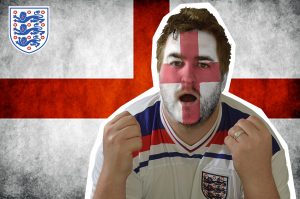 Do you ever see someone at work and think “I could do that!”? I certainly do when I watch TV and the football is on and the commentator is endlessly spouting nonsense. Now I am willing to accept that there is a degree of skill involved. I’m even prepared to accept that a lot of research goes into their jobs. But a lot of time I think the only qualifications needed are an A level in clichés and lack of a filter between the brain and the mouth. Not convinced? Let’s have a few examples.
“He’s got a lot of self-belief in himself” – GRAHAM BEECROFT (as opposed to???)
“And with 4 minutes gone, the score is already 0-0.” – IAN DARK (wonder what it was after 3 minutes?)
“Strangely, in slow motion replay, the ball seemed to hang in the air for even longer.” – DAVID ACFIELD (how strange David!)
“What will you do when you leave football, Jack — will you stay in football?” – STUART HALL (mess with his head Jack and say “neither”).
“If you closed your eyes, you couldn’t tell the difference between the two sides” – PHIL BROWN
3. Lack of 3pm Matches on the Box
This is one of the most frustrating things in football! If I lived in Spain, Italy, India, Jamaica, probably even Mars, I could watch football at 3pm, with a beer, on my comfy armchair. But no! The powers that be have decided that showing a game (that I would have no interest in going to anyway) at 3pm on Saturday would ‘threaten the sanctity’ of the traditional Saturday 3pm kick-off. What utter tosh!
However, if you are like me and this grinds your gears, then hope may be on the horizon! The European Court of Justice recently conducted a study and found that the 3pm black-out has ‘little or no impact’ on attendances and in-fact, the 3pm rule may restrict the European Commission’s desire for cross-border access to audio-visual content.
This sounds great, now as long as we don’t do anything to upset our relationship with Europe, we should all be fine!
Is it Normal to Hate International Fixtures?
 I used to love international football, I really did! It seems a very distant memory now but at one point in life, I was actually excited to see how the Three Lions would perform against our continental cousins. Growing up, we had an amazing team. Even to this day, the hair sticks up at the back of my neck when I think of players like Bryan Robson, Tony Adams, Stuart Pearce and Terry Butcher. I look at the current England team and to quote Bonnie Tyler, “where have all the good men gone?”
Am I looking at the teams of old through nostalgic, rose tinted glasses? Perhaps! It is true that the teams I remember so fondly, won nothing. I guess it’s also true that the teams in the past caused even more pain than the current team because I believed! It seemed possible, no more than that, it seemed inevitable, it would only be a matter of time till an England team won a major tournament in my lifetime. But of course I’m still waiting!
So maybe a lot of my general indifference to International football is not down to the current team at all. Could it be that I don’t like Raheem Sterling because Frank Lampard missed a penalty in the 2006 World Cup? Could my loathing of Daniel Sturridge be down to the mighty Paul Ince missing a penalty in the Argentinian World Cup in 1998? And surely wanting to punch Joe Hart has nothing to do with Gareth Southgate missing from 18 yards against the Germans, that wouldn’t make sense, would it?
They do say, “once bitten, twice shy” so maybe that is it. The unrequited love I had for the England team in the 80’s and 90’s has made me incapable of feeling! Maybe the years of physiological abuse at the hands of the England team have just made me an uncaring shadow of my former self.
 My relationship with the England football team does often feel like a relationship that is enduring the last rites. In my head I want to walk away, I want to ignore the voice that says “I’ll change, you watch, this time I’ll make you proud” but so often I fall for it and 90 minutes of tedium later I vow never to put myself through this torture ever again, but I do!
I do have one reason though for not campaigning to have the whole England team assigned to room 101 though! The reason? Without an England team, we wouldn’t get any England football songs! And although the team may be terrible, I will stand tall and proudly declare that we make the best footy songs in the world! You only have to look at songs such as Vindaloo, World In Motion and Three Lions to know what I’m talking about!
Welcome Fellow Sports Fans!
 Welcome to my blog post, let me introduce myself! My name is Matt and I would describe myself as the Victor Meldrew of bloggers. Or more accurately, the Victor Meldrew of sports blogging! But let me explain! I wasn’t always miserable, in fact, I would even say I used to be quite an optimistic person, but I guess being on the emotional rollercoaster of supporting Lincoln City and being an Englishman for so many years has taken a toll on my sanity. So rather than being angry, I’m perhaps slightly mad.
The trouble is, I see things everywhere that wind me up! I read about Fifa, it winds me up! I read about football players on £350k a week, it winds me up! I see a player rolling around the floor, clutching his face and trying to con the referee into giving a penalty, it winds me up! I see myself as a proper football man, I know what I like and if I don’t get it then you’ll certainly hear about it!
But fear not! This blog won’t just be the outpourings of a crazed mind. My blog won’t simply be full of constant moaning, oh no! You see, at the heart of it all is my passion for sports. I spend a lot of my time watching various sports, as well as researching them. So along with my pet peeves and the stuff that grinds my gears, inevitably there’s bound to be some good news in there too!
I will use this blog to moan, of course I will but I also want to season my complaining with a healthy dose of sarcasm, a sprinkle of humour and a big dessert spoon of fun sporting facts to help you get through the day. Today’s thought: Just because you’re paranoid, doesn’t mean they are not talking about you!